
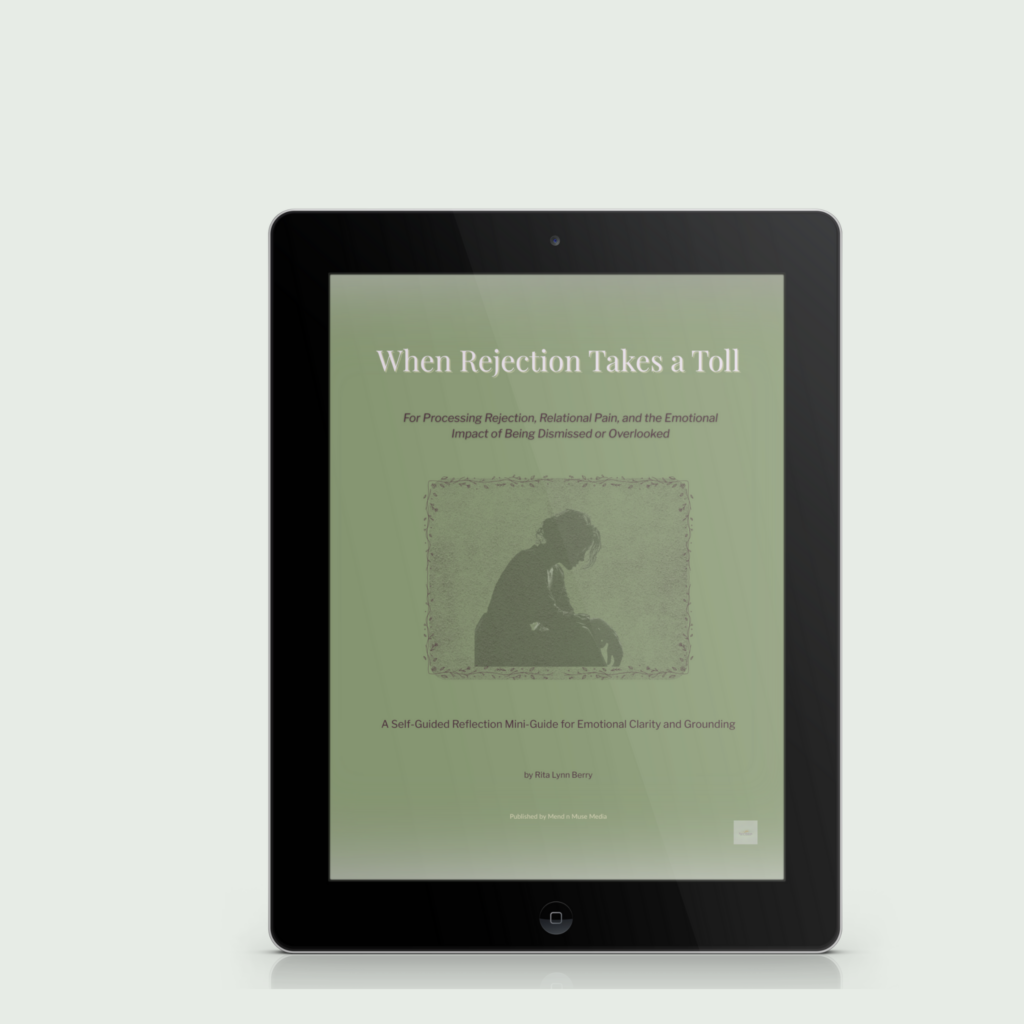
Rejection can leave a quiet but lasting impact—especially when it touches places of vulnerability, hope, or belonging.
When Rejection Takes a Toll is a self-guided reflection mini-guide created to support individuals navigating the emotional weight of rejection, dismissal, or relational hurt. Whether experienced in personal relationships, family dynamics, work environments, or social spaces, rejection can linger in ways that affect confidence, emotional safety, and self-trust.
This resource offers a gentle, structured space to reflect, process, and reconnect with clarity and self-compassion.
What This Guide Is Designed to Support
This reflection guide may be helpful if you are experiencing:
Emotional pain following rejection or dismissal
Lingering self-doubt after relational conflict or loss
Sensitivity to feeling overlooked, excluded, or unseen
Difficulty trusting yourself or others after rejection
Emotional fatigue related to repeated relational strain
The guide is designed to support reflection without judgment, pressure, or the need to “move on” before you’re ready.
How This Guide Can Be Used
This mini-guide includes reflective prompts and grounding exercises that invite you to:
Acknowledge the emotional impact of rejection
Explore internal responses with honesty and care
Identify patterns that may shape how rejection is experienced
Reconnect with self-worth, emotional clarity, and steadiness
It can be used:
Independently as a personal reflection tool
Alongside counseling as a supportive resource
During periods of relational strain, loss, or transition
At your own pace, returning to sections as needed
There is no expectation to resolve or “fix” anything—only to notice and reflect.
A Supportive Note
Rejection often affects more than a single moment—it can shape how we see ourselves and relate to others over time. This guide is intended to offer space for reflection and emotional awareness, especially when rejection feels heavy, confusing, or difficult to articulate.
It is not intended to diagnose, treat, or replace mental health care, but to serve as a supportive, educational resource.
This resource is educational and reflective in nature and is not a substitute for counseling or mental health treatment. If you are experiencing distress that feels overwhelming or persistent, professional support may be beneficial.
You may also find helpful: